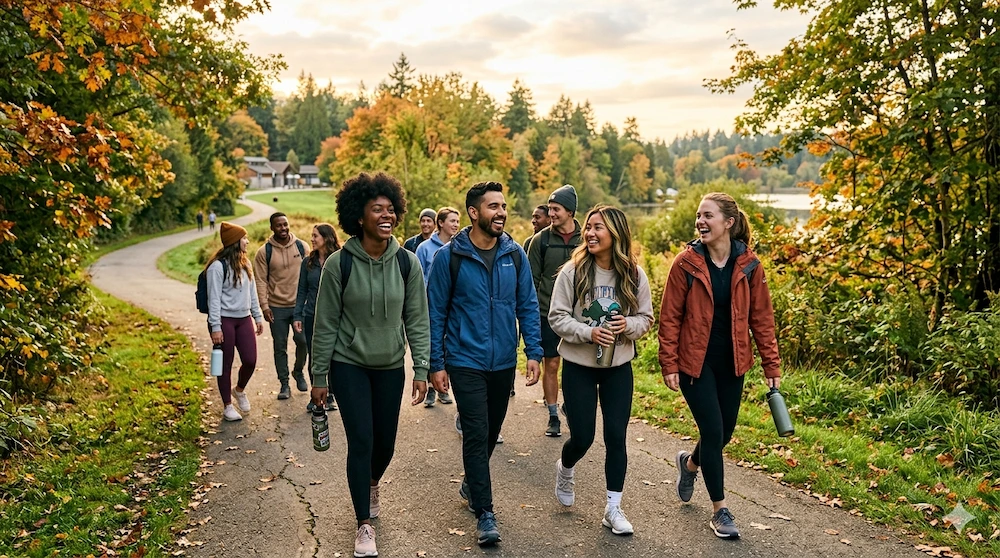
The gym used to be the default setting for anyone serious about fitness. But if you’ve been paying attention to what’s happening on social media or in city parks lately, you’ve probably noticed a shift. A growing number of young adults are trading treadmills for trails — and expensive memberships for something completely free.
Walking clubs are having a major moment, especially among Gen Z. What started as a way to stay active during lockdowns has evolved into a full-blown movement. The key point is that it’s not just about fitness anymore — it’s about community, mental health, and pushing back against the isolating nature of modern life.
💡 This article explores the rise of walking clubs, why they resonate so deeply with young adults, and how you can start or join one in your area.
📋 Table of Contents
- 🚶 The Walking Club Phenomenon: Why Now?
- 🧠 Beyond Steps: The Mental Health Perks of Walking Together
- 🏋️ Gym vs. Walking Club: A Side-by-Side Comparison
- 📝 How to Start or Join a Walking Club in Your Area
- 🌿 Staying Safe and Comfortable During Group Walks
- 🤝 The Social Factor: Why Community Matters in 2025
- ❓ Frequently Asked Questions
🚶 The Walking Club Phenomenon: Why Now?
If you scroll through TikTok or Instagram, you’ve probably seen the videos: groups of young people walking through parks, city streets, or nature trails, chatting and laughing. These are walking clubs, and they’re not just a fleeting trend. The walking club phenomenon has taken off because it meets Gen Z where they are — craving connection, affordability, and a break from the relentless pressure of curated wellness.
For many young adults, traditional gyms are intimidating, expensive, and feel isolating. You show up, plug in your headphones, and do your workout alone. Walking clubs offer the opposite: a low-stakes, social way to move your body. Plus, the health benefits of walking are well-documented. According to the World Health Organization (WHO, 2024), regular walking can reduce the risk of cardiovascular disease and improve mental well-being. So, why are we just now seeing this resurgence? Turns out, the pandemic played a huge role. When gyms closed, people started walking outside more — and they invited friends along. That habit stuck.
From what I’ve seen, this is more than just exercise. It’s a quiet rebellion against the hyper-optimized, often unattainable fitness standards pushed by influencers. There’s no pressure to lift heavy weights or run a 5-minute mile. You just walk. And that, honestly, is incredibly refreshing.
“Do you often feel like exercise is a chore?” + “Could you use more social connection?”
If either resonates, a walking club might be exactly what you need — it’s free, fun, and surprisingly effective.
🧠 Beyond Steps: The Mental Health Perks of Walking Together
The mental health benefits of group walking are actually huge — and they might be the main reason young adults are choosing clubs over gyms. Walking releases endorphins, but doing it with others adds an extra layer of emotional support. In a time when loneliness is increasingly recognized as a public health issue, walking clubs provide a consistent, low-pressure way to build community. Research from the Journal of Health Psychology (2023) suggests that walking in a group can reduce symptoms of depression and anxiety more effectively than walking alone.
That said, it’s not just about the endorphins. There’s something grounding about being in nature or a green space while sharing a conversation with someone. It forces you to slow down. You’re not checking your phone or worrying about your next set. You’re just present. For a generation that’s often overwhelmed by digital noise, that kind of presence is rare and valuable.
Plus, the social accountability helps. It’s easier to skip a solo walk than it is to bail on a group of friends who are waiting for you. This gentle pressure keeps people consistent, which is key for long-term health. In my opinion, that’s the secret sauce — it turns exercise from a chore into a date.
“Do you often feel anxious or lonely?” + “Have you struggled to stay consistent with exercise?”
If you answered yes, joining a walking club could provide a double benefit — movement and meaningful social contact.
🏋️ Gym vs. Walking Club: A Side-by-Side Comparison
To really understand the shift, it’s helpful to compare the two directly. On one side, you have the traditional gym: a controlled environment with expensive equipment, overhead lighting, and a monthly fee. On the other, you have the walking club: zero cost, fresh air, and a built-in social circle. Let’s break down some of the key differences.
Gyms offer structured workouts and varied equipment, which can be beneficial for specific goals like bodybuilding. However, for general health and well-being, walking is highly underrated. A 2023 study from the walking for fitness found that walking just 30 minutes a day can significantly lower blood pressure and improve cholesterol levels. Walking clubs make it easy to hit that target without the intimidation factor.
Financially, the difference is stark. The average gym membership in the US and UK costs anywhere from $50–$100 per month. Walking clubs are free. For Gen Z, who are often dealing with student debt and rising living costs, that’s a game-changer. Worth noting, many cities now have established walking groups, but starting one with a few friends is just as easy and much more personal.
Gym vs. Walking Club: Quick Comparison
“Are you paying for a gym you don’t use?” + “Do you dislike working out alone?”
If this sounds familiar, it might be time to cancel your membership and try a walking club — your wallet and social life will thank you.
📝 How to Start or Join a Walking Club in Your Area
Getting involved is surprisingly simple. Whether you want to join an existing group or start your own, the barrier to entry is virtually zero. The how to start a walking club process is less about logistics and more about consistency.
If you’re looking to join, check out platforms like Meetup or Facebook Groups. Many cities have organized “walk and talk” groups that meet weekly. In the UK, groups like “Walking for Health” coordinate walks nationwide. In the US, local park districts often host community walks. Globally, the trend is so widespread that you can likely find something by searching “[your city] walking club” on your preferred social media app.
If you can’t find a group, start one. It doesn’t require a budget or a venue. Just pick a time, a route, and post about it. The key is to be consistent — meet every Wednesday at 6 PM, for example. Invite a few friends and ask them to bring someone. From what I’ve seen, these clubs grow organically because they’re genuinely fun. Keep the pace easy, the vibe welcoming, and the route accessible.
Don’t forget to set some basic ground rules. Establish a safe route, be clear about the meeting point, and consider a no-headphones policy to encourage conversation. It’s also a good idea to have a backup plan for bad weather, like a covered area or a local indoor track.
“Do you know a safe local route?” + “Do you have at least one friend who’d join?”
If the answer is yes, you have everything you need to start your own club this week — pick a day and post about it.
🌿 Staying Safe and Comfortable During Group Walks
While walking is a low-impact activity, there are still some practical considerations to keep in mind, especially when walking in groups. Walking club safety tips are often overlooked, but they’re crucial for making sure everyone has a good time.
First, think about visibility. If your club walks in the early morning or evening, make sure everyone has reflective gear or a small light. This is especially important if your route involves crossing streets. Second, stay aware of your surroundings. It’s easy to get lost in conversation, but it’s good to have a designated leader who can keep an eye on traffic and trail conditions.
Hydration is another thing that’s easy to forget on a walk. Even if it’s not a rigorous workout, bringing a water bottle is a good habit. Weather also plays a role. In many parts of the world, the climate can change quickly. A simple rule is to dress in layers and have a plan for inclement weather. In Australia, for example, the UV index can be extreme, so wearing a hat and sunscreen is non-negotiable during daytime walks.
Finally, be mindful of the pace. A walking club should be inclusive. Not everyone walks at the same speed, and that’s okay. Make it a point to let the group know that the pace is casual, and encourage people to walk at their own comfort level. The point is to enjoy the company, not to race.
“Have you mapped a safe, well-lit route?” + “Do you have a plan for extreme weather?”
If not, take 10 minutes to plan a safety checklist — it makes the experience better for everyone.
🤝 The Social Factor: Why Community Matters in 2025
At its core, the rise of walking clubs is a story about community building through walking clubs. Gen Z is often labeled the “lonely generation,” and research supports that. A 2023 report from the Surgeon General in the US highlighted an “epidemic of loneliness” that affects all ages, but young adults are particularly vulnerable. Walking clubs offer a low-stakes, non-digital way to connect.
The social dynamics are interesting. Unlike a gym class or a running club, a walking club doesn’t have a competitive edge. You don’t have to be fast or in shape. You just have to show up. This makes it accessible to a wide range of people. It’s also a natural setting for conversation. Side-by-side walking is less intense than face-to-face sitting, making it easier to talk about personal things or just share a comfortable silence.
Globally, we’re seeing similar trends. In the UK, “Walk and Talk” groups are popping up in most major cities. In Australia, “Trek and Talk” groups combine walking with mental health advocacy. In the US, clubs like “Girls Who Walk” have grown from small meetups to massive organized events. These groups often host themed walks, like “Wellness Wednesdays” or “Sundays for Self-Care,” which add an extra layer of engagement.
From what I’ve seen, the social aspect is the glue. People come for the exercise but stay for the friends they make. And that kind of organic, low-pressure community is hard to find anywhere else in modern life. It’s a gentle reminder that sometimes the best form of self-care is simply being present with others.
“Do you feel like your social circle is shrinking?” + “Do you wish you had more casual ways to meet people?”
If you answered yes, a walking club is one of the easiest and healthiest ways to expand your community — the only requirement is showing up.
❓ Frequently Asked Questions
Q1. What exactly is a walking club?
A1. A walking club is simply a group of people who meet regularly to walk together. It’s a casual, social approach to fitness that emphasizes movement, conversation, and community over performance.
Q2. Do I need to be fit to join a walking club?
A2. Not at all. Walking clubs are typically designed to be inclusive. Most clubs keep a comfortable, conversational pace. If you can walk for 20–30 minutes, you’re fit enough to join.
Q3. Are walking clubs only for young people?
A3. Absolutely not. While they’ve become popular among Gen Z, walking clubs appeal to all ages. You’ll find groups with diverse age ranges, and many welcome everyone.
Q4. Where can I find walking clubs near me?
A4. Search “walking club” or “walk and talk” on platforms like Meetup, Facebook, or even TikTok. You can also check with local parks departments, community centers, or health organizations.
Q5. Is walking really enough exercise to stay healthy?
A5. Yes, absolutely. The World Health Organization (WHO, 2024) recommends at least 150 minutes of moderate-intensity aerobic activity per week. Walking briskly fits this description perfectly and offers significant cardiovascular and mental health benefits.
Q6. What should I bring to a walking club meetup?
A6. Wear comfortable shoes, dress for the weather, and bring a water bottle. Some people also bring a small backpack for essentials like sunscreen or a light jacket.
Q7. Can I start a walking club even if I don’t know anyone?
A7. Yes. Many successful walking clubs started with one person posting about it online. If you build it, people will come — especially in areas where such groups don’t exist yet.
Q8. Are there walking clubs that focus on specific themes or causes?
A8. Yes. Many clubs have themes, like mental health advocacy, pet-friendly walks, or even book clubs that walk while discussing a book. Finding a niche can make the group more engaging and attract like-minded people.
Disclaimer: This post is for informational purposes only and does not constitute medical advice. Always consult with a healthcare provider before starting any new exercise regimen. Walking clubs are a great way to stay active, but listen to your body and prioritize safety.