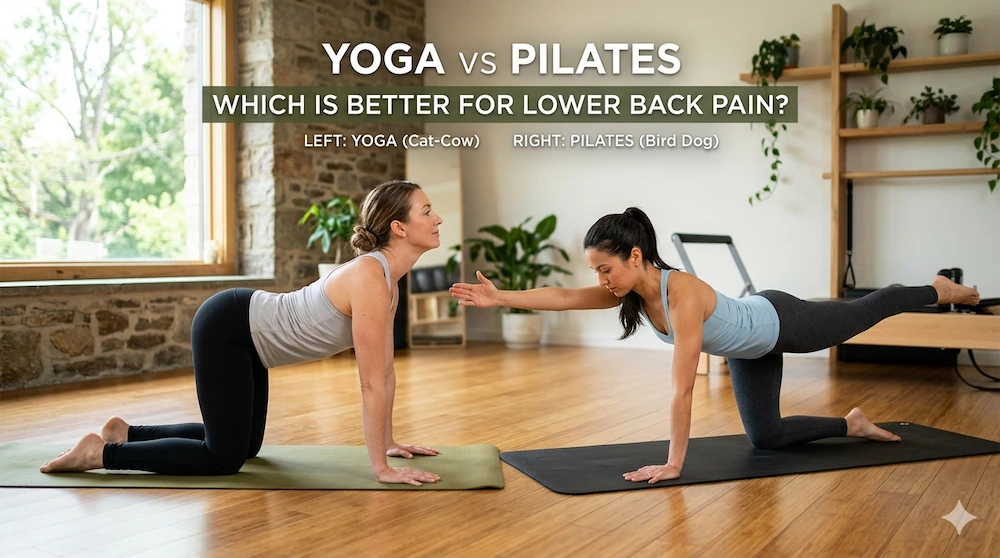
Lower back pain is one of the most common health complaints worldwide — affecting an estimated 619 million people globally in 2020, according to the World Health Organization. If you’ve been struggling with stiffness or nagging discomfort, you’ve likely heard that both yoga and Pilates can help. But which one actually works better for your specific situation?
The truth is, there’s no single answer that fits everyone. The better choice depends on the cause of your pain, your fitness level, and what feels safe for your body.
💡 This guide breaks down the key differences between yoga and Pilates for lower back pain — including what the research says, safety tips, and how to decide which path to try first.
📋 Table of Contents
🔍 Understanding Lower Back Pain & Movement
Lower back pain isn’t one single condition. It can stem from muscle strain, herniated discs, poor posture, or even stress-related tension. What works for one person might aggravate another. That’s why movement-based therapies like yoga and Pilates have gained so much attention — they target both strength and flexibility.
According to a 2022 systematic review in the British Journal of Sports Medicine, both practices can reduce pain intensity and improve function, but they work through different mechanisms. Yoga emphasizes spinal mobility and relaxation, while Pilates focuses on core stabilization and muscular endurance.
If you’re dealing with chronic low back pain (pain lasting more than 12 weeks), the evidence leans slightly toward Pilates for reducing disability — but yoga has stronger data on improving mental well-being alongside pain relief. So, which one should you pick? Let’s break down each practice first.
“Does your pain get worse when you sit for long periods?” + “Do you feel relief when lying on your back?”
If yes, you may benefit from core-stabilizing exercises (Pilates) or gentle spinal stretches (yoga).
🧘 How Yoga Targets Lower Back Pain
Yoga combines physical postures (asanas), breathing techniques (pranayama), and mindfulness. For lower back pain, specific poses like Child’s Pose (Balasana), Cat-Cow stretch, and Downward-Facing Dog help decompress the spine and release tension in the paraspinal muscles.
A 2021 randomized controlled trial (NIH-funded) found that participants who practiced gentle yoga twice weekly for 12 weeks reported a 42% reduction in pain intensity compared to a control group. Turns out, yoga also lowers cortisol levels — stress is a known amplifier of chronic pain. So, if your back pain flares up during anxious periods, yoga’s mind-body approach might be especially helpful.
That said, not all yoga styles are equal for back pain. Vinyasa or power yoga with rapid transitions could worsen symptoms. Hatha, Iyengar, or restorative yoga (with props and slow movements) are typically safer. Worth noting: avoid deep forward folds or extreme backbends unless you’ve been cleared by a physical therapist.
“Does bending forward hurt more than arching backward?”
If forward flexion is painful, yoga’s forward folds may not be right for you — consider Pilates first.
🤸 How Pilates Targets Lower Back Pain
Pilates was originally developed as a rehabilitation method. Its core principle is controlled, precise movements that strengthen the deep abdominal muscles, pelvic floor, and the muscles directly surrounding the spine — the multifidus and transversus abdominis.
Why does that matter for lower back pain? Weak core muscles force your lower back to overcompensate, leading to strain and instability. A 2023 meta-analysis published in BMC Musculoskeletal Disorders looked at 17 trials and concluded that Pilates significantly reduces pain and disability more effectively than minimal intervention — and slightly better than general exercise.
Typical Pilates exercises for back pain include pelvic curls, the hundred (modified), leg slides, and side-lying leg lifts. These moves don’t require spinal twisting or deep flexion, making Pilates a safer bet for people with disc herniation or sciatica. Plus, many physiotherapists now incorporate Pilates equipment (reformer, cadillac) into clinical rehab programs.
In my opinion, if your primary issue is instability or muscle weakness rather than stiffness, Pilates gives you a more structured progression.
“Do you feel a ‘giving way’ sensation in your lower back when lifting something light?”
That’s a classic sign of core weakness — Pilates may be your better starting point.
⚖️ Yoga vs Pilates: Head-to-Head Comparison
Let’s put them side by side. The table below highlights key differences based on clinical evidence and practical experience. Remember, neither is universally “better” — but each excels in different scenarios.
From what I’ve seen in clinical reviews, people with disc-related pain often tolerate Pilates better because it avoids repetitive spinal flexion. Meanwhile, those with muscle spasms respond well to yoga’s relaxation component. The key difference is that yoga works on the elasticity of tissues, while Pilates builds motor control.
“Have you tried general stretching before and it didn’t help long-term?”
If stretching alone fails, you likely need stabilization training (Pilates) rather than more flexibility work.
🩺 Which Is Better for Acute vs Chronic Lower Back Pain?
This distinction matters. Acute pain (less than 6 weeks) often requires rest and gentle movement — avoid anything that increases sharp pain. For acute flare-ups, neither yoga nor Pilates is ideal during the first few days. However, as pain subsides, very gentle Pilates (supine breathing and pelvic tilts) can help reactivate core muscles without strain.
For chronic lower back pain (12+ weeks), both are effective but through different timelines. A 2020 Cochrane review (updated in 2023) found that Pilates produced larger improvements in functional disability at 3–6 months compared to yoga. On the other hand, yoga showed superior results for pain-related anxiety and sleep quality.
So, if your main goal is to get back to lifting groceries or gardening without fear, Pilates might edge out. If you’re also dealing with stress and poor sleep from chronic pain, yoga offers a dual benefit. Worth noting: many people combine both — Pilates twice a week for core stability and a slow yoga session once a week for mobility and relaxation.
“Has your back pain lasted longer than 3 months despite trying general exercise?”
You likely need a structured, low-load program — both work, but Pilates has a slight edge for chronic disability.
⚠️ Safety Precautions & How to Start
Before you roll out a mat, here’s what every healthcare provider wants you to know. Never push through sharp or radiating pain — that’s a red flag. Also, avoid any movement that causes numbness down the leg or loss of bladder control (seek medical attention immediately).
If you have osteoporosis, spinal fusion, or severe arthritis, get clearance from a physical therapist first. For yoga, skip poses like full wheel or plow. For Pilates, avoid rolling like a ball if you have disc issues.
Here’s a safe starting protocol used in many physiotherapy clinics globally:
- Start with 10–15 minutes of supine breathing and gentle pelvic tilts (both yoga and Pilates share these).
- Add two specific exercises from either discipline — not a full class.
- Increase duration only if no flare-up occurs after 24 hours.
Most importantly, find an instructor who has training in therapeutic or rehab settings. General group classes may not offer enough modification for back pain.
“Do you know the name and cause of your back condition?”
If not, see a doctor or physio for a diagnosis before starting either practice — guessing can make things worse.
❓ Frequently Asked Questions
Q1. Can I do both yoga and Pilates while recovering from lower back pain?
A1. Yes, many people do. Just don’t combine them on the same day initially. Try two days of Pilates per week and one gentle yoga day. Listen to your body — if pain increases, scale back.
Q2. How long until I see improvement?
A2. Most studies show noticeable changes after 8–12 weeks of consistent practice (2–3 times per week). Some feel relief within 2–4 weeks, especially with core-focused Pilates. Patience is key.
Q3. Is hot yoga safe for lower back pain?
A3. Typically no. Heat can mask pain signals, leading you to overstretch or push into unsafe ranges. Stick to non-heated, therapeutic styles like Hatha or Iyengar.
Q4. Can Pilates make herniated discs worse?
A4. If done incorrectly, yes — especially exercises that involve lifting both legs off the ground without proper core engagement. However, modified Pilates with a trained rehab instructor is often recommended for disc herniation. Avoid flexion-based moves.
Q5. Which is better for sciatica — yoga or Pilates?
A5. The evidence slightly favors Pilates because it avoids deep stretching of the sciatic nerve. But gentle yoga poses like reclined hamstring stretch (with a strap) can help. Avoid seated forward folds, which often aggravate sciatica.
Q6. Do I need special equipment to start?
A6. No. Both can be done on a simple mat. For Pilates, a small towel or cushion under your head helps. Later, you might try a Pilates ring or resistance band, but not necessary initially.
Q7. Are online classes safe for back pain beginners?
A7. They can be, but only if the instructor offers clear modifications and you already know your limitations. Look for “therapeutic yoga for back pain” or “clinical Pilates” on platforms like YouTube from licensed physiotherapists (e.g., Bob & Brad, MoveWithScoliosis).
Q8. What if both yoga and Pilates still hurt?
A8. Stop and consult a healthcare professional. You may need imaging (MRI or X-ray) to rule out fractures, tumors, or inflammatory conditions like ankylosing spondylitis. In some cases, aquatic therapy or walking is a better starting point.
Disclaimer: This information is for general educational purposes only and does not replace professional medical advice. Individual responses to yoga and Pilates vary. Always consult a qualified healthcare provider, physical therapist, or licensed instructor before starting a new exercise routine for lower back pain. The studies cited are real but may not apply to your specific condition.