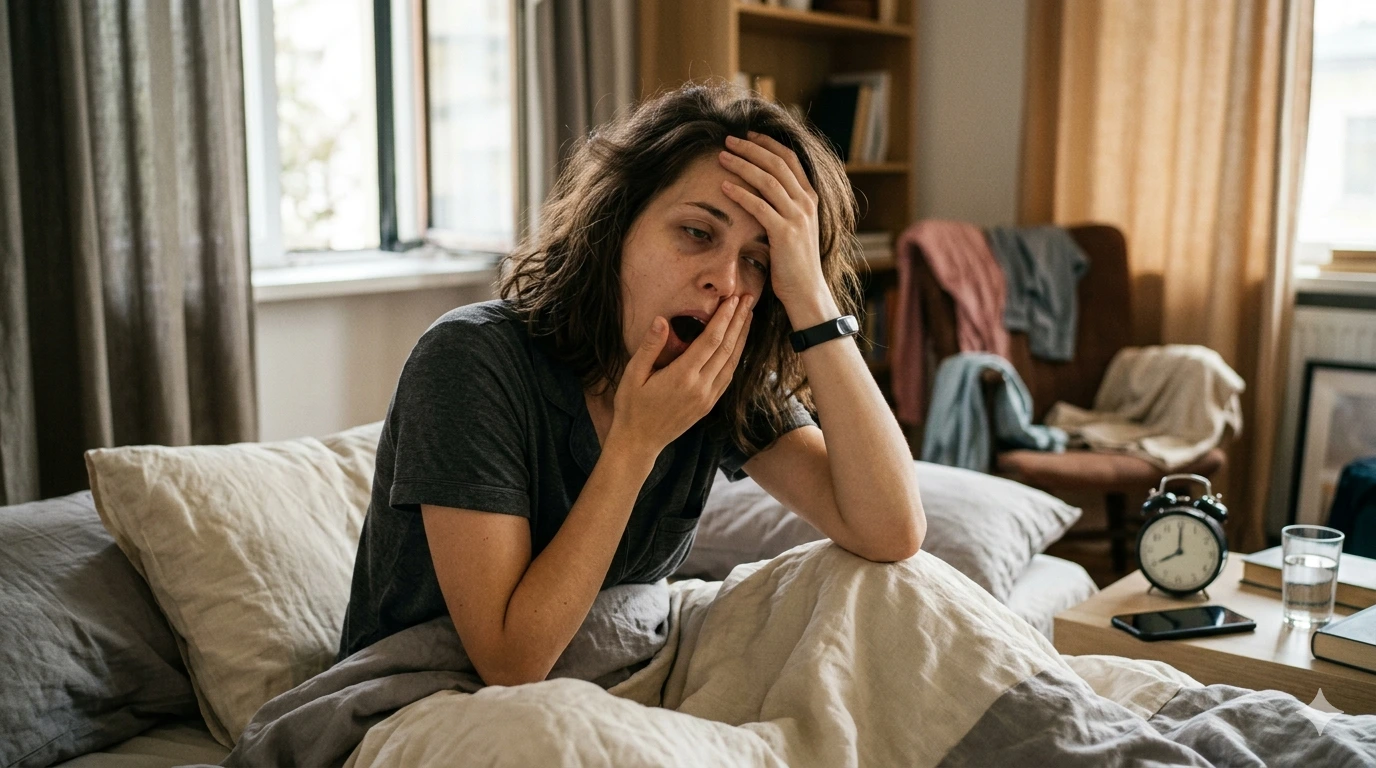
You set a solid eight hours. Maybe even nine. Yet the alarm goes off and you feel like you’ve been hit by a truck — heavy limbs, foggy brain, zero motivation. That frustrating, hungover feeling without any of the fun.
The truth is, sleep quantity doesn’t equal sleep quality. Millions of people around the world log “enough” hours but wake up exhausted. The reasons range from how you sleep to what your body is doing while you’re unconscious.
💡 This guide breaks down the real culprits behind post-sleep fatigue — and what you can actually do about it, no matter where you live.
📋 Table of Contents
- 🔍 Sleep Quantity vs. Quality: The Real Difference
- 🧠 Sleep Inertia: Why Your Brain Refuses to Wake Up
- 🌬️ Hidden Sleep Disorders: Apnea and Beyond
- ⏰ Your Internal Clock: Circadian Rhythm Misalignment
- 🩺 Medical Conditions That Steal Your Energy
- 🛠️ 5 Fixes to Wake Up Refreshed (Actionable Steps)
- ❓ Frequently Asked Questions
🔍 Sleep Quantity vs. Quality: The Real Difference
Eight hours in bed doesn’t mean eight hours of restorative sleep. Your brain cycles through four stages: N1 (light), N2 (deeper light), N3 (deep slow-wave sleep), and REM (dreaming). Deep sleep is when your body repairs tissues, clears metabolic waste, and strengthens immunity. REM handles memory and emotional regulation. If you spend too little time in these stages, you’ll wake up exhausted — even after nine hours.
According to the World Health Organization (WHO, 2022), roughly 1 in 3 adults globally fail to get sufficient quality sleep. But here’s what many miss: fragmented sleep — repeatedly waking up without remembering it — can slash deep sleep by up to 60%. That silent thief is often caused by noise, stress, or an undiagnosed condition. Worth noting: as we age, deep sleep naturally declines, starting around age 30. So that eight-hour stretch might feel longer, but your brain isn’t getting the same restoration it once did.
If you’re unsure whether your sleep is actually restorative, track how you feel within 30 minutes of waking. Genuinely rested people feel alert, not groggy. That leads us to the next big reason for morning fatigue.
“Do you wake up more than twice per night?” + “Do you feel unrefreshed even after 7+ hours?”
If yes to either, you likely have poor sleep quality, not insufficient quantity. Let’s dig into why.
🧠 Sleep Inertia: Why Your Brain Refuses to Wake Up
You open your eyes but your brain feels like molasses. That’s sleep inertia — a natural period of grogginess and impaired performance that can last anywhere from 15 minutes to over an hour. The key trigger? Waking up from deep slow-wave sleep (stage N3). If your alarm jolts you out of that stage, your brain’s prefrontal cortex — responsible for decision-making — takes time to reboot. According to a 2021 meta-analysis in Sleep Medicine Reviews, sleep inertia is more severe and prolonged in people with chronic sleep deprivation, even if they clock eight hours on weekends.
But here’s the twist: oversleeping can worsen inertia. Sleeping longer than your body needs (which varies by genetics, age, and activity level) increases the chance you’ll slip back into deep sleep right before waking. That’s why a 10-hour sleep can feel worse than six hours. The global average optimal range is 7–9 hours for adults, per the National Sleep Foundation (2023), but the exact number is individual. Consistent wake times reduce inertia severity, while irregular schedules amplify it. In Japan, researchers at the University of Tsukuba found that exposure to bright blue-enriched light within 5 minutes of waking cuts inertia duration by nearly half — a cheap, effective fix.
So if you’re consistently foggy for more than 30 minutes, your sleep architecture is likely misaligned. Next, let’s look at the most underdiagnosed cause of morning exhaustion.
“Does your grogginess last longer than 30 minutes most mornings?” + “Do you sleep in on weekends by 2+ hours?”
If you answered yes, sleep inertia and social jetlag could be your main problem — and it’s fixable.
🌬️ Hidden Sleep Disorders: Apnea and Beyond
Obstructive sleep apnea (OSA) is the top hidden culprit. Your airway repeatedly collapses during sleep, cutting off oxygen for 10–60 seconds, dozens or hundreds of times per night. You wake up — often without realizing it — gasping or choking. The result: zero deep sleep and extreme daytime fatigue. Globally, the American Thoracic Society (2023) estimates that nearly 1 billion adults have mild to severe OSA, with 80% undiagnosed. In Europe, a 2022 Lancet Respiratory Medicine study found that 49% of men and 23% of women aged 40–85 have moderate to severe OSA.
Other disorders that destroy sleep quality include restless legs syndrome (RLS) (irresistible urge to move legs, especially at night) and periodic limb movement disorder (PLMD) (involuntary leg jerks every 20–40 seconds). Both fragment sleep without you knowing. A simple at-home sleep study or a visit to a sleep clinic can diagnose these. Treatment — CPAP machines, oral appliances, or iron supplements for RLS — often restores normal energy within weeks.
Worth noting: snoring isn’t harmless. Loud, frequent snoring with pauses in breathing is a red flag for OSA. If your partner notices you stop breathing, that’s a medical signal to act.
“Has anyone told you that you snore loudly or stop breathing during sleep?” + “Do you wake up with a sore throat or headache?”
Two yes answers strongly suggest sleep apnea. Talk to your doctor about a sleep study — it could change everything.
⏰ Your Internal Clock: Circadian Rhythm Misalignment
Every cell in your body runs on a ~24-hour internal clock. When your sleep schedule conflicts with that clock, you get circadian misalignment. Even if you sleep eight hours from 2 AM to 10 AM, your body may still produce cortisol and melatonin at the wrong times, leaving you tired. Delayed sleep phase syndrome (DSPS) — common in teens and young adults — makes falling asleep before midnight nearly impossible. But waking up for work at 7 AM creates chronic social jetlag. The OECD (2023) reports that 15-30% of adults in developed nations experience regular circadian misalignment due to shift work or late-night screen use.
Interestingly, your chronotype (whether you’re a natural morning lark or night owl) is largely genetic. A 2022 Nature Communications study of 700,000 people identified over 350 genetic variants linked to morning preference. Forcing a night owl into an early schedule without adjusting light exposure leads to that foggy, hungover feeling. In Germany, the Max Planck Institute found that night owls forced into morning routines had 30% higher levels of sleep inertia and worse cognitive performance.
The fix: align sleep with your natural tendency when possible, and use bright light therapy in the morning (if you need to wake earlier) or evening (if you need to delay). Avoid bright screens 1–2 hours before your target bedtime.
“Do you feel more energetic at 10 PM than 10 AM?” + “Do you sleep 2+ hours later on weekends?”
That’s classic delayed phase or social jetlag. Morning light exposure for 20 minutes can help shift your clock.
🩺 Medical Conditions That Steal Your Energy
Sometimes the problem isn’t in your sleep — it’s in your blood, thyroid, or immune system. Iron-deficiency anemia reduces oxygen delivery to tissues, causing profound fatigue that sleep can’t fix. The WHO (2021) estimates that 30% of the global population has anemia, with higher rates in women and low-income regions. Hypothyroidism (underactive thyroid) slows your metabolism — prevalence ranges from 5-10% of adults globally, per the Thyroid Foundation. Symptoms include fatigue, weight gain, cold intolerance, and depression. Both are diagnosed with simple blood tests.
Other energy thieves: chronic fatigue syndrome (ME/CFS), type 2 diabetes (high blood sugar disrupts sleep and energy), and vitamin D deficiency. A 2020 Journal of Clinical Sleep Medicine study found that low vitamin D correlates with shorter sleep duration and poorer sleep quality, regardless of total hours. The global prevalence of vitamin D insufficiency is estimated at 50-80% across many countries, especially in northern latitudes.
If you’ve tried improving sleep hygiene for a month and still feel exhausted after eight hours, see your doctor. Ask for a complete blood count, thyroid panel (TSH, free T4), ferritin, and vitamin D. In my opinion, skipping these basic tests is the most common mistake people make before assuming it’s “just bad sleep.”
“Do you feel cold often, have brittle nails, or experience unexplained weight changes?” + “Has your energy been low for more than 3 months despite good sleep?”
These point to a possible thyroid or iron issue. A routine blood test can give you answers within days.
🛠️ 5 Fixes to Wake Up Refreshed (Actionable Steps)
You don’t need to accept morning exhaustion as normal. Try these evidence-based fixes. 1. Consistent wake time — even on weekends. Your brain’s clock craves regularity. A 2023 Sleep Health study found that a 90-minute weekend sleep-in increases social jetlag and fatigue scores. 2. Morning sunlight within 30 minutes of waking. Open blinds or go outside. This stops melatonin production and sets your circadian rhythm. 3. No caffeine after 2 PM. Caffeine’s half-life is 5–6 hours, but its effects can linger for 12 hours, fragmenting deep sleep.
4. Rule out sleep apnea with a home test. Many companies and public health systems offer affordable take-home devices. In the UK, the NHS provides free sleep studies for suspected OSA. In Australia, GPs can refer you for a subsidized test. 5. Try a sleep-move schedule. Light physical activity within an hour of waking (a 10-minute walk, gentle stretching) boosts cortisol rhythm and clears adenosine, the chemical that builds sleep pressure.
Start with one fix for a week. Track your morning energy on a 1–10 scale. Most people see improvement in 10–14 days. If nothing changes after a month, that’s your signal to see a doctor for those blood tests and a sleep study referral.
“Which fix will you try first?” + “Have you made a doctor’s appointment to rule out medical causes?”
Pick one action right now. Small changes produce real results when you stick with them for two weeks.
❓ Frequently Asked Questions
Q1. Why do I feel more tired after sleeping 8 hours than after 6 hours?
A1. Likely because you woke up from deep sleep (sleep inertia) or have fragmented sleep due to undiagnosed sleep apnea. Oversleeping can also disrupt your circadian rhythm. Quality matters more than quantity.
Q2. Can oversleeping cause fatigue?
A2. Yes. Regularly sleeping more than 9–10 hours (for adults) is associated with higher rates of depression, low-grade inflammation, and circadian misalignment. The optimal range is 7–9 hours for most adults.
Q3. How do I know if I have sleep apnea without a sleep study?
A3. You can’t confirm it without testing, but common signs include loud snoring, breathing pauses noticed by a partner, morning headaches, dry mouth, and excessive daytime sleepiness. A home sleep study is simple and widely available.
Q4. What blood tests should I ask for if I’m always tired?
A4. Complete blood count (iron/anemia), ferritin (iron stores), thyroid panel (TSH, free T4), vitamin D, and vitamin B12. In some regions, a metabolic panel to check blood sugar and kidney function is also useful.
Q5. Is it normal to feel tired for an hour after waking?
A5. Sleep inertia lasting 15–30 minutes is normal. Up to an hour can happen after severe sleep deprivation or waking from deep sleep. If it’s longer than 60 minutes or happens daily, investigate further.
Q6. Does my phone affect my sleep even if I use night mode?
A6. Yes — blue light is reduced, but cognitive stimulation (scrolling, reading stressful news, gaming) keeps your brain alert. The WHO recommends no screens for 1 hour before bed for optimal sleep quality.
Q7. Can dehydration make morning fatigue worse?
A7. Absolutely. You lose water through breathing and sweating overnight. Even mild dehydration (1-2% body weight) reduces alertness and increases perceived fatigue. Drink a glass of water within 30 minutes of waking.
Q8. How long should I try lifestyle fixes before seeing a doctor?
A8. 4–6 weeks of consistent sleep hygiene (same wake time, morning light, no late caffeine) is a reasonable trial. If you still feel exhausted after eight hours, see your doctor for a sleep study and blood work.
Disclaimer: This information is for general educational purposes only and reflects guidelines available as of 2025. It does not constitute medical advice. Individual health conditions vary — always consult a qualified healthcare professional or a sleep specialist for personal evaluation. If you suspect a sleep disorder, seek proper diagnosis from a licensed provider in your country.