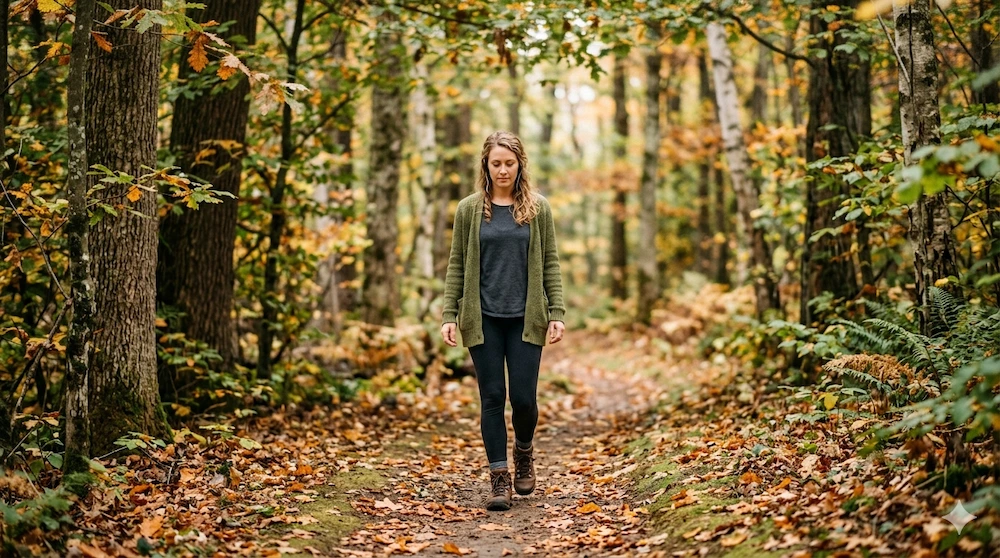
We often think of meditation as sitting cross-legged in complete silence, but what if the key to mindfulness was a simple walk? Quiet walking is emerging as a powerful alternative for those who find traditional meditation challenging.
The core of this practice isn’t about moving fast — it’s about cultivating a deep awareness of the present moment while your body is in motion.
💡 This guide explores what quiet walking is, the science behind its benefits, and how you can integrate it into your daily routine for a calmer, more grounded mind.
📋 Table of Contents
🚶♀️ What is Quiet Walking?
At its core, quiet walking is the practice of walking with complete, conscious awareness. It’s not about getting from point A to point B, nor is it a vigorous workout. Instead, it’s about being present in each moment.
The idea is to turn a simple stroll into a moving meditation. You focus on the sensation of your feet touching the ground, the rhythm of your breath, and the subtle sounds around you. It’s a form of mindfulness in motion.
From what I’ve seen, many people find this approach to meditation more accessible. For those who struggle to sit still, quiet walking offers a way to channel that restless energy into a mindful practice. So, is quiet walking the new meditation trend? It just might be because it lowers the barrier to entry.
“Do you feel restless when trying to meditate?” + “Do you enjoy being outdoors?”
If you answered yes, quiet walking could be the perfect practice for you — it combines the benefits of mindfulness with the simple joy of movement.
🧠 The Science Behind Quiet Walking and Mindfulness
It’s not just a trend; there’s real science backing this practice. Research shows that combining the rhythmic, repetitive motion of walking with focused attention can trigger the relaxation response.
Studies have found that mindful walking can reduce cortisol levels, the stress hormone. A 2023 study published in the Journal of Environmental Psychology noted that participants who engaged in mindful walking reported lower stress and higher levels of well-being compared to those walking without direction.
The key point is that quiet walking changes your brainwave activity. It promotes a state of “relaxed alertness” that is similar to what is achieved in traditional meditation. This state is linked to improved mood, better focus, and a greater sense of peace.
Furthermore, the natural environment often associated with quiet walking adds another layer of benefit. Exposure to green spaces has been linked to improved cognitive function and reduced symptoms of anxiety and depression. It’s a powerful combination of physical activity and mental focus. If you’re curious about starting, finding a quiet park or path is a great first step.
“Have you been feeling stressed or anxious lately?” + “Do you find yourself distracted easily?”
If so, a 20-minute quiet walk could be as effective as a sitting meditation session — and it might be easier to stick with.
✨ Mental Health Benefits of Quiet Walking
The benefits of quiet walking extend far beyond just a brief break from the day. It offers a suite of profound mental health advantages that can transform your overall well-being.
For starters, it’s an excellent way to manage anxiety and depression. The rhythmic nature of walking, combined with the focus on the present, helps to break the cycle of negative thoughts. This is similar to cognitive behavioral therapy techniques that encourage grounding oneself in the “here and now.”
Quiet walking also boosts creativity. When your mind is allowed to wander in a structured, attentive way, it can connect dots you wouldn’t otherwise see. Many artists and thinkers throughout history have used walking as a tool for problem-solving. According to a 2014 study from Stanford University, walking can increase creative output by an average of 60%. The key is to simply let your thoughts flow while remaining aware of your surroundings.
Additionally, it’s a fantastic way to improve your sleep quality. By reducing stress and promoting relaxation, quiet walking can help regulate your sleep-wake cycle. A 2025 report from the Sleep Foundation suggests that light physical activity, especially when done mindfully, can be more effective for sleep than rigorous exercise before bed.
“Do you struggle with racing thoughts at night?” + “Do you feel mentally drained after work?”
If yes, quiet walking in the evening could help you decompress and signal to your body that it’s time to rest — it’s a gentle, effective way to end the day.
📝 How to Start a Quiet Walking Practice
Starting a quiet walking practice is wonderfully simple. It doesn’t require any special equipment, apps, or a dedicated meditation space. You just need a pair of comfortable shoes and a willingness to be present.
Here are some steps to guide you:
- Choose your location: Find a safe, relatively quiet place to walk. It could be a local park, a quiet suburban street, or even a large indoor space like a museum. The goal is to minimize distractions.
- Set an intention: Before you start, take a moment to set a simple intention. It could be to “clear my mind,” “enjoy the outdoors,” or “just be.” This is your anchor for the practice.
- Begin walking slowly: Don’t rush. Start at a pace that is comfortable and almost leisurely. Focus on the physical sensations of walking: the feel of the ground beneath your feet, the movement of your legs, your arms swinging gently.
- Bring your attention to your breath: Once you’re in a rhythm, bring your awareness to your breathing. Don’t try to change it, just observe it. Notice the inhale and the exhale. Sync your steps with your breath if it feels natural.
If your mind wanders—and it will—simply acknowledge the thought and gently guide your focus back to your walking or breathing. This act of returning is the very essence of the practice. It’s not about having a blank mind; it’s about noticing when you’ve been distracted and choosing to come back.
That said, you don’t need to walk for an hour to feel the benefits. Even a 10-minute walk can be rejuvenating. Consistency is more important than duration.
“Are you unsure about how to start?” + “Do you overthink the ‘correct’ way to do it?”
Here’s the thing: there is no perfect way to do it. The best practice is the one you actually do. So just step outside and take it from there.
🔄 Quiet Walking vs. Traditional Meditation
So, how does quiet walking stack up against traditional, sitting meditation? While they share a common goal of mindfulness, the experience is quite different. In my opinion, they’re complementary practices rather than competitors.
Traditional meditation often requires a high level of focus to maintain stillness. For some, this can be a hurdle. Quiet walking offers a more dynamic form of mindfulness. The physical movement gives the mind a softer landing place for its attention. If you’re fidgety, the motion can channel that energy productively.
Here’s a quick comparison:
The key difference is that quiet walking can feel less intimidating. It’s a more active, outward-focused practice compared to the inward focus of sitting meditation. Both are valuable, and many seasoned meditators use walking meditation as a break during long retreats.
Ultimately, the “best” choice is the one you will do consistently. For many, the accessibility and dual benefit of physical and mental exercise make quiet walking a fantastic entry point into the world of mindfulness.
“Are you struggling to stick with a traditional practice?” + “Do you want to feel more grounded quickly?”
Then combining both might be the sweet spot. A 10-minute quiet walk can serve as a warm-up for a sitting meditation, or it can stand alone as a complete practice.
💡 Tips for a Deeper Walking Practice
Once you’ve got the basics down, you can explore ways to deepen your practice. Here are a few tips to make your quiet walks more immersive and beneficial.
Use all your senses. Don’t just focus on what you see. Bring awareness to what you hear, smell, and feel. Is there a breeze? Can you smell rain or freshly cut grass? What does the texture of the ground feel like under your feet? Engaging all your senses anchors you firmly in the present.
Experiment with pacing. While a slow, leisurely pace is great for beginners, you can also try varying your speed. A slightly faster pace can help you build energy and focus, while a very slow, deliberate pace (sometimes called “slow walking”) can be incredibly calming. The key is to be intentional about your pace and observe how it changes your experience.
Walk without a destination. This is a powerful way to practice non-attachment. Instead of walking to a specific location, just walk. Turn around when it feels right. This simple act can shift your mindset from one of goal-orientation to one of pure presence. Turns out, letting go of the destination can be a meditation in itself.
Ditch the headphones. In our digital world, it’s tempting to listen to music or a podcast during a walk. For quiet walking, try leaving the headphones behind. The sounds of the natural world are part of the practice. They are not distractions but rather objects of focus and awareness. This can be challenging at first, but it’s incredibly rewarding.
“Do you usually walk with music or a podcast?” + “Are you curious about a different experience?”
If so, try just one walk per week without any audio. You might be surprised at how much more you notice and how much more relaxed you feel afterward.
❓ Frequently Asked Questions
Q1. Is quiet walking the same as a regular walk?
A1. No, the difference is in the intention and focus. A regular walk is often about getting exercise or getting from one place to another. Quiet walking is about being fully present and aware of each step and breath, without a fixed destination in mind.
Q2. How long should a quiet walk be for it to be effective?
A2. Any length of time can be beneficial. For beginners, 5-10 minutes is a great starting point. As you become more comfortable, you can extend the time. The quality of your attention is more important than the duration of the walk.
Q3. Can I do quiet walking indoors?
A3. Absolutely. You can practice quiet walking in a hallway, a large room, or even a quiet shopping mall. The principle remains the same: focus on the sensation of walking and your breath.
Q4. What if I don’t have a quiet place to walk?
A4. You can practice in any environment. The sounds of a city or a busy park are not distractions but part of the experience. The goal is to be aware of them without judgment. A 2020 study on urban mindfulness found that being aware of city sounds can enhance the mindfulness experience.
Q5. Is it okay to walk with a specific problem in mind?
A5. Yes, it can be helpful. You can set a specific intention at the start of your walk. For example, you might say, “For the next 15 minutes, I will explore this feeling of uncertainty.” The walking becomes a moving contemplation.
Q6. Should I focus on my breath or my steps?
A6. You can focus on either, or both. Many people find it helpful to sync their breath with their steps. For example, you could take three steps while breathing in and three steps while breathing out. Experiment and see what feels most natural to you.
Q7. Can quiet walking help with chronic pain?
A7. For some people, yes. The gentle, mindful movement can help improve body awareness and reduce the stress and anxiety associated with pain. Always consult with your doctor before starting any new exercise routine for managing pain.
Q8. Is this a new trend or an ancient practice?
A8. While “quiet walking” as a term is trending, the practice itself has ancient roots. It is a foundational part of Buddhist meditation (kinhin) and has been used for centuries in various contemplative traditions. It’s an old practice with a modern name.
Disclaimer: The information in this post is for general informational purposes only and reflects general wellness practices. The effects of meditation and walking can vary from person to person. Always consult with a qualified healthcare provider before starting any new health or wellness routine. This post does not constitute medical advice.
