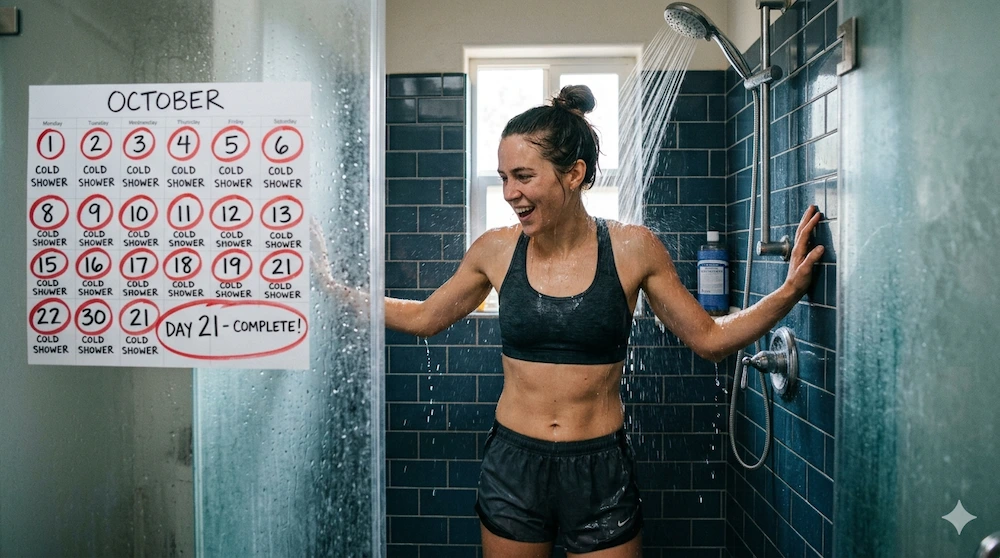
The alarm goes off at 6:15 AM. It’s winter. And instead of stepping into a warm, steamy shower, I turn the dial all the way to cold. Every single morning for three weeks.
To be honest, the first few days were miserable. I gasped, shivered, and questioned every life choice. But after hearing so much about the benefits — from better focus to stronger immunity — I had to see for myself.
💡 Below is my honest, day-by-day experience with cold morning showers, plus what the science actually says. No hype — just what I learned.
📋 Table of Contents
❄️ Why I Decided to Try Cold Showers
For years, I’d scroll past social media posts about people jumping into frozen lakes or taking icy morning showers, claiming it changed their lives. I’ll admit — I was skeptical. But when my mid-afternoon energy crashes started getting worse and my sleep quality declined, I got curious.
Cold exposure isn’t new. From Nordic ice baths to Japanese tepid cold therapy, many cultures have used cold water for centuries to boost circulation and mental resilience. A 2022 meta-analysis in the International Journal of Circumpolar Health found that regular cold water immersion can reduce stress markers and improve overall well-being.
What motivated me most? The idea that a small, free daily habit could potentially replace my second coffee. No expensive equipment, no gym membership — just turning the shower dial.
So I set a simple rule: every morning, immediately after waking, shower on the coldest setting for 2–3 minutes. No warm start. No cheating. Three weeks. Here’s what actually happened.
“Do you often feel groggy in the morning?” + “Do you rely on caffeine to function before noon?”
If yes, a 30-second cold blast might be worth trying — but start slowly. Listen to your body first.
🥶 Week 1: Shock, Gasps, and Adaptation
Day 1 was brutal. I stepped in, and my breath literally stopped for a second. The cold felt like thousands of tiny needles on my shoulders and back. I lasted 45 seconds. Dried off, shivered for ten minutes, and wondered why anyone would do this voluntarily.
Day 2 wasn’t much better. But I noticed something: the shock response — that involuntary gasp — happened a little later. By Day 4, I could control my breathing. Inhale for 4 seconds, hold for 4, exhale for 6. That made a huge difference.
What surprised me most during the first week was the after-effect. About 15 minutes after the shower, I felt strangely awake. Not jittery like coffee — just calm and clear. Turns out, cold water triggers the release of norepinephrine and endorphins, which naturally elevate mood and alertness. A 2016 study in Medical Hypotheses suggested that cold showers may help reduce symptoms of depression by activating the sympathetic nervous system.
By Day 7, I could comfortably handle 90 seconds. The initial dread was still there, but the screaming in my head had turned into a quiet complaint.
“Can you tolerate 30 seconds of cold water on your legs only?”
If yes, try adding 10 seconds each day. Never force yourself into pain or numbness — that’s a sign to stop.
🌡️ Week 2: Unexpected Changes
The second week brought surprises. First, my skin stopped feeling dry after showers. I’d always used warm water and lotion afterward. Cold water doesn’t strip natural oils the way hot water does. My face looked less red, and my hands weren’t cracking.
Second, my sleep improved noticeably. I started falling asleep faster — about 15 minutes instead of the usual 45. Cold exposure in the morning helps regulate your circadian rhythm. A 2019 review in Frontiers in Physiology noted that temperature shifts (especially cold in the morning) can entrain your body’s internal clock.
Another change: my afternoon slump disappeared. By 2 PM, I used to feel foggy. Now I was still focused. Worth noting — I didn’t change my diet or sleep schedule. The only new variable was the cold shower.
Day 10, I increased to 2 minutes. The key was to keep moving under the water, rotating my arms and legs. Standing still made it feel colder. I also started ending my regular warm showers with 30 seconds of cold on days when I needed a hair wash (cold water isn’t great for removing oils, so I compromised).
Honestly, by the end of week two, I was looking forward to the challenge. The feeling of accomplishment after finishing a cold shower — that small victory — started my day on a confident note.
“Do you feel energized or drained after a cold shower?”
If you feel drained, you’re likely staying in too long or the water is too cold. Reduce to 30 seconds and see how you feel.
⚡ Week 3: The Real Shift
By week three, cold showers became a habit — not something I dreaded. I’d wake up, turn the knob without hesitation, and stand under cold water for a full 3 minutes. The gasp still happened, but only for the first 10 seconds. After that, my body adapted. My breathing stayed slow and deep.
The biggest change was mental resilience. Doing something uncomfortable every morning made the rest of the day’s stressors feel smaller. A tough email? An annoying commute? Those things didn’t hit as hard. I felt calmer under pressure.
Also, my recovery after workouts improved. On days I ran or lifted weights, a cold shower (within an hour) reduced muscle soreness. A 2021 systematic review in Sports Medicine found that cold water immersion can lower perceived muscle soreness by up to 20% in the 24–48 hours post-exercise.
What didn’t change? I didn’t get superhuman immunity. I still caught a mild cold (though it lasted only 3 days instead of my usual 7). And cold showers won’t replace medical treatment for any condition. But as a free tool for energy and focus? It worked for me.
In my opinion, the three-week experiment was worth it. The hardest part was the first 3 days. After that, it became oddly satisfying.
“Have you ever tried a 30-second cold blast after a warm shower?”
If not, that’s the safest way to start. Gradual exposure is key to building tolerance and avoiding shock.
🔬 What Science Says About Cold Water Exposure
Let’s look at what research actually confirms — not just influencer claims.
1. Reduced inflammation and muscle recovery. A 2017 meta-analysis in the British Journal of Sports Medicine analyzed 23 studies and concluded that cold water immersion (10–15°C for 10–15 minutes) reduces delayed-onset muscle soreness compared to passive recovery.
2. Mood and alertness boost. Repeated cold exposure increases norepinephrine levels by up to 200–300%, according to a 2007 study in the European Journal of Applied Physiology. That’s the neurotransmitter responsible for focus and attention.
3. Immune system activation. A Dutch study (2016) in PLOS ONE found that people who took cold showers (30–90 seconds) for 30 days had a 29% reduction in sick days from work. That said, the effect was modest and not a cure-all.
4. Brown fat activation. Cold stimulates brown adipose tissue, which burns calories to generate heat. A 2014 study in the Journal of Clinical Investigation showed that regular mild cold exposure can increase brown fat volume and activity. But don’t expect significant weight loss from cold showers alone — the effect is small.
What science doesn’t support: claims that cold showers “detox” your body (your liver and kidneys already do that) or cure chronic diseases. Always talk to your doctor before starting if you have heart conditions, high blood pressure, or Raynaud’s syndrome.
“Do you have any diagnosed heart or circulation issues?”
If yes, consult a healthcare provider before trying cold showers. The cold shock can raise blood pressure temporarily.
🚿 How to Start Cold Showers Safely (5 Steps)
If you want to try this yourself, here’s a gradual protocol that worked for me and aligns with expert recommendations.
Step 1: Start with warm, end with cold
Take your normal warm shower. In the last 30 seconds, turn the temperature to cool (not freezing). Breathe normally. Do this for 3 days.
Step 2: Increase cold duration
Add 10 seconds every other day until you reach 90 seconds of cold at the end of your shower. Keep the water around 15–20°C (60–68°F) — you don’t need ice water.
Step 3: Go cold-only for the last minute
Once you can handle 90 seconds, try starting the shower warm, then switching to fully cold for the final 60–90 seconds. Focus on your breathing — deep inhales, longer exhales.
Step 4: Cold from the start (optional)
If you want the full morning jolt, skip the warm-up entirely. Begin cold for 1–2 minutes. This is what I did after week two. It’s tougher, but the alertness hit is stronger.
Step 5: Listen to warning signs
Stop immediately if you feel numbness, chest pain, dizziness, or extreme shivering that won’t stop. Those are signs you’re pushing too far. Cold showers should be uncomfortable, not dangerous.
One more thing: don’t take cold showers immediately after a very intense workout (wait 20–30 minutes) or when you’re already feeling chilled from being outside.
“Can you comfortably breathe through your nose during the cold shower?”
If you’re gasping or holding your breath, warm it up slightly until you can breathe steadily. That’s your safe zone.
❓ Frequently Asked Questions
Q1. Is it safe to take cold showers every day?
A1. For most healthy people, yes. Start with 30 seconds and gradually increase. However, if you have heart disease, uncontrolled high blood pressure, Raynaud’s phenomenon, or are pregnant, check with your doctor first.
Q2. How cold should the water actually be?
A2. Aim for 10–15°C (50–60°F) for therapeutic benefits. But don’t obsess over exact temperature. “Cold enough to make you breathe deeply but not shiver uncontrollably” is a good rule.
Q3. Will cold showers help me lose weight?
A3. They activate brown fat, which burns a small number of extra calories — roughly 50–100 calories per day if you’re consistent. That’s not a weight loss solution on its own, but it can complement diet and exercise.
Q4. Can cold showers improve my immune system?
A4. Some research (including the 2016 Dutch study) suggests a modest reduction in sick days. But cold showers are not a substitute for vaccination, sleep, or good nutrition. Think of them as a supporting habit.
Q5. What’s the best time of day for cold showers?
A5. Morning is ideal because the temperature increase after the shower helps reset your circadian rhythm and boost alertness. Taking cold showers at night might keep some people awake, though others find it relaxing.
Q6. Why do I feel warm after a cold shower?
A6. That’s your body’s natural response. Blood vessels constrict in the cold, then dilate (expand) afterward, bringing warm blood to the skin’s surface. That’s why you feel a pleasant warmth after drying off.
Q7. How long should a cold shower last for benefits?
A7. Studies show benefits starting at 30 seconds, with optimal effects around 2–5 minutes. Staying longer than 10 minutes can increase risks of hypothermia without added benefits.
Q8. I hate cold water. Can I still get benefits with cool (not freezing) showers?
A8. Absolutely. Water around 20°C (68°F) still triggers mild stress response and endorphin release. The key is consistency, not extreme temperature. A cool shower you’ll actually do every day beats an ice bath you only try once.
Disclaimer: This article reflects one person’s experience and general research findings. It is not medical advice. Cold water exposure carries risks, especially for individuals with cardiovascular conditions. Always consult a qualified healthcare professional before starting any new health practice, including cold showers.