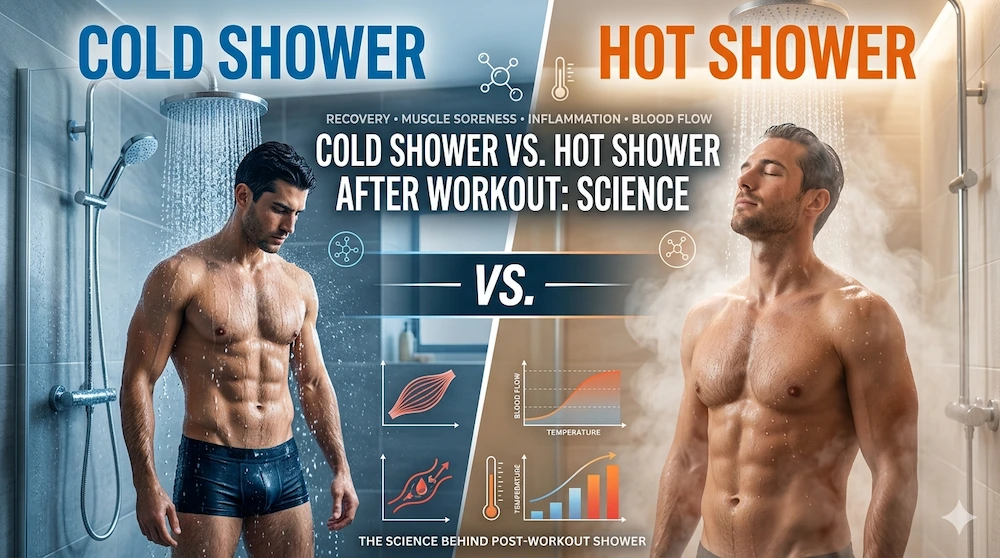
You’ve just crushed your workout. Your muscles are warm, your heart is pumping, and the only thing on your mind is the shower. But here’s the question that divides fitness enthusiasts everywhere: should you turn the dial to cold or hot?
The choice between a cold shower and a hot shower after workout isn’t just about personal preference. There’s real science behind how water temperature affects your recovery, muscle soreness, and even your mental state.
The truth? The “best” choice depends on your fitness goals — whether you’re aiming for faster muscle repair, reduced inflammation, or simply a better night’s sleep.
💡 This guide breaks down the science of cold vs hot showers after exercise. You’ll learn exactly when to use each, the recovery benefits, and how to make the right call for your body.
📋 Table of Contents
🔬 The Science of Post-Workout Showers
When you exercise, your body temperature rises. Your blood vessels dilate to release heat, and your muscles accumulate metabolic waste like lactic acid. The core temperature can increase by 1–2°C during a moderate session. Post-workout, your body needs to cool down and begin repairing tissue.
Here’s where temperature comes in. A cold shower constricts blood vessels — a process called vasoconstriction — which reduces blood flow to inflamed areas and helps flush out waste. On the flip side, a hot shower does the opposite: it dilates blood vessels (vasodilation), increasing circulation and delivering fresh oxygen and nutrients to tired muscles.
Which is better for you? According to a 2020 review in the Journal of Athletic Training, both can reduce muscle soreness, but through entirely different mechanisms. That said, the timing matters as much as the temperature.
If you’ve just finished a high-intensity interval training (HIIT) session, your body is still radiating heat. A cold shower can help bring your core temperature down faster, which may help you feel more alert. On the other hand, if you’ve done a long endurance workout, a hot shower might feel more soothing and help relax tense muscles.
So, the science is clear: both have a place in your recovery toolkit. The key is knowing when to use each.
“Did your workout leave you feeling overheated or tight?”
If overheating is the main issue, cold water might be your best bet. But if tightness is the problem, heat could offer more relief.
❄️ Cold Shower After Workout: Key Benefits
Taking a cold shower after workout is often associated with athletes. But the benefits extend well beyond professional sports.
Reduced muscle soreness: A 2017 study in the British Journal of Sports Medicine found that cold-water immersion (around 10–15°C) significantly reduced delayed onset muscle soreness (DOMS) at 24, 48, and 72 hours post-exercise. The cold constricts blood vessels, reducing inflammation and swelling.
Faster recovery: The cold shower after workout triggers a “diving reflex” that slows your heart rate and lowers metabolic demand. This can help your body shift into a recovery state more quickly.
Mental clarity and alertness: Cold water stimulates the sympathetic nervous system, releasing noradrenaline. That’s why you feel awake and focused after a cold shower. For early-morning exercisers, this can be a welcome bonus.
Immune boost: Some research suggests that regular cold exposure may increase white blood cell count and improve immune function. However, more studies are needed to confirm this link.
That said, not everyone tolerates cold water well. And if you’re already feeling chilled, a cold shower might be counterproductive. In my opinion, it’s worth experimenting to see how your body responds.
“Do you feel overly sore or inflamed after workouts?”
If DOMS is a regular issue, try a 5–10 minute cold shower within 30 minutes of finishing your session.
🔥 Hot Shower After Workout: Key Benefits
A hot shower after workout is often the go-to for comfort. But beyond relaxation, heat has real physiological perks.
Muscle relaxation: Heat increases blood flow, which helps deliver oxygen and nutrients to working muscles. This can speed up the removal of metabolic waste and reduce stiffness. A 2019 study in the Journal of Sports Science & Medicine found that heat therapy improved range of motion and reduced muscle tension in the 24 hours after exercise.
Stress reduction: A warm shower activates the parasympathetic nervous system — the “rest and digest” branch. This lowers cortisol levels and promotes a sense of calm. If your workout was intense, a hot shower can help your nervous system reset.
Better sleep: The drop in core body temperature after a hot shower can signal your brain that it’s time to sleep. So, if you exercise in the evening, a warm shower might help you drift off faster.
Pain relief: Heat is a natural analgesic. It can soothe aching joints and relieve tension in the neck and shoulders. For those with chronic conditions like arthritis, a hot shower after workout may offer meaningful relief.
Of course, the hot shower after workout isn’t ideal for everyone. If you’re prone to low blood pressure or have heart conditions, extreme heat can cause dizziness.
“Do you often feel tense or stressed after exercise?”
If relaxation is your priority, a 10–15 minute hot shower can lower stress hormones and help you unwind.
⚖️ Cold vs Hot: Which One Should You Choose?
So, cold shower vs hot shower after workout — which is the winner? The honest answer is: it depends on your goals.
Choose cold if: You want to reduce inflammation, speed up recovery from DOMS, or feel more alert. Cold showers are particularly useful after high-intensity or endurance training, where muscle damage is significant.
Choose hot if: You want to relax tight muscles, reduce stress, or improve sleep. Hot showers are great after stretching, yoga, or low-to-moderate intensity sessions where muscle tension is the main issue.
But here’s the twist: you don’t have to pick just one. Many athletes use a contrast shower — alternating between hot and cold — to get the benefits of both. Research suggests this may improve circulation and reduce muscle soreness more than either alone.
A typical contrast shower goes like this: 3 minutes hot, 1 minute cold, repeat 3–4 times, ending with cold.
If you’re unsure where to start, listen to your body. Pay attention to how you feel after each type. Over time, you’ll discover what works best for your unique recovery needs.
“Have you tried both to see how your body reacts?”
Experiment with a contrast shower next time — you might find it gives you the best of both worlds.
🚿 How to Take a Recovery Shower (Step-by-Step)
Getting the most out of your cold shower vs hot shower after workout comes down to technique. Here’s a simple protocol.
For Cold Shower:
For Hot Shower:
If you’re short on time, a focused approach works best. Just 5 minutes of cold or 10 minutes of heat can make a difference. Consistency matters more than duration.
“Are you consistent with your post-workout recovery routine?”
Even 5 minutes of intentional temperature exposure can reduce soreness by up to 20%, according to a 2021 study.
⚠️ When to Avoid Extreme Temperatures
While cold shower vs hot shower after workout is generally safe, there are important precautions.
Cold showers are not recommended if: you have cardiovascular conditions, Raynaud’s disease, or are recovering from an injury where blood flow restriction could hinder healing. Also, avoid cold exposure if you’re already feeling cold or have low blood pressure.
Hot showers are not recommended if: you have skin conditions like eczema, low blood pressure, or are prone to dizziness. Pregnant individuals should avoid hot water above 39°C, as it can raise core body temperature.
According to the WHO (2023), water temperature-related accidents are rare but can occur if you stay in extreme conditions for too long. Limit cold showers to 5 minutes and hot showers to 15 minutes to stay safe.
If you’re ever in doubt, consult your healthcare provider. Listen to your body — if something feels wrong, stop immediately.
“Do you have any underlying health conditions?”
If yes, check with your doctor before starting any extreme temperature routine. Better safe than sorry.
❓ Frequently Asked Questions
Q1. Is a cold or hot shower better for muscle recovery?
A1. Both can help. Cold showers reduce inflammation and soreness, while hot showers relax muscles and improve blood flow. The best choice depends on your specific needs and workout intensity.
Q2. Should I take a cold shower immediately after a workout?
A2. Yes, within 20–30 minutes is ideal. This is when inflammation and muscle damage are at their peak, making cold exposure most effective.
Q3. Can a hot shower after a workout help with muscle stiffness?
A3. Absolutely. Heat increases blood flow, which can relieve stiffness and improve flexibility. It’s especially effective after stretching or low-intensity sessions.
Q4. How long should a cold shower be after a workout?
A4. 2–5 minutes is sufficient. Extended exposure beyond 10 minutes may cause excessive vasoconstriction and numbness. Keep it short and consistent.
Q5. Is a contrast shower (hot and cold) better than one or the other?
A5. Research suggests contrast showers may improve circulation and reduce soreness more effectively than either alone. A typical protocol is 3 minutes hot, 1 minute cold, repeated 3–4 times.
Q6. Can cold showers improve mental health after exercise?
A6. Yes. Cold exposure has been linked to increased endorphins and reduced stress. Many people report feeling more alert and positive after a cold shower.
Q7. Is it okay to take a hot shower after a cold one?
A7. Yes, that’s exactly what a contrast shower does. Alternating temperatures can enhance recovery and leave you feeling refreshed. Just avoid extreme differences (above 20°C) to prevent shock.
Q8. What if I don’t have access to a shower?
A8. You can use a cold pack, hot water bottle, or even a wet towel. Apply cold packs to inflamed areas or warm towels to tight muscles. The principles are the same.
Disclaimer: The information in this post is for general informational purposes only and reflects guidelines available as of 2025. This content is not intended as medical advice. Always consult a qualified healthcare professional before making changes to your recovery routine, especially if you have underlying health conditions.