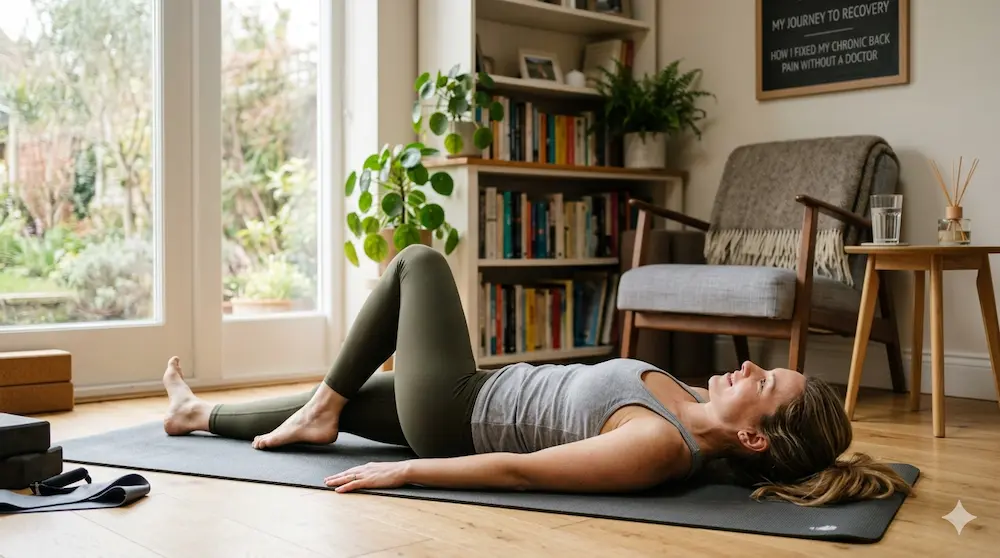
For years, I lived with a dull, persistent ache in my lower back that flared up after sitting too long, carrying groceries, or even just waking up. I assumed I needed a specialist, expensive scans, or maybe even surgery.
Turns out, the solution wasn’t in a prescription pad. After months of trial, error, and a lot of learning, I discovered that consistent movement, targeted posture adjustments, and small daily habit changes made all the difference. No doctor visit required for the core fixes.
💡 This is my personal roadmap — from constant discomfort to feeling strong and mobile again — using principles available to anyone, anywhere.
📋 Table of Contents
- 🧠 Understanding Chronic Back Pain: What Was Actually Going On
- 🚶 Why Movement Became My First Real Treatment
- 🪑 Fixing My Posture at Work and Home
- 🧘 3 Key Exercises That Helped the Most
- 😴 How Sleep Position and Mattress Choice Made a Difference
- 🍎 Lifestyle Habits That Supported My Recovery
- ⚠️ When I Would Still See a Doctor (No Regrets)
- ❓ Frequently Asked Questions
🧠 Understanding Chronic Back Pain: What Was Actually Going On
My back pain didn’t start after a single injury. It crept in over years of slouching at a desk, skipping movement, and ignoring early warning signs. Chronic back pain is rarely about one damaged disc — it’s often a mix of weak stabilizing muscles, poor movement patterns, and prolonged postures that stress the spine.
According to the World Health Organization (2023), low back pain is the leading cause of years lived with disability globally. That stat hit home for me. I realized I wasn’t alone, but also that most people never learn the basics of spinal hygiene.
Here’s what I found: most nonspecific chronic back pain has no structural “problem” that surgery or injections fix. Instead, it’s a motor control issue — your brain and muscles forget how to move efficiently. The key isn’t rest. It’s retraining.
So I stopped looking for a magic fix. I started treating my back like a system that needed daily maintenance, not emergency repair.
“Does your back feel worse after sitting for 30+ minutes?” + “Do you avoid bending or lifting because it hurts?”
If yes, your pain likely has a movement and posture component — meaning you can influence it directly.
🚶 Why Movement Became My First Real Treatment
Complete bed rest sounded tempting. But research — including a 2022 systematic review in The Lancet Rheumatology — shows that prolonged rest actually delays recovery for chronic nonspecific back pain. Movement, done right, is medicine.
I started small. Walking for 10 minutes after every meal became my non-negotiable. Nothing intense. Just enough to pump fluid through spinal tissues and remind my back muscles how to work.
Within two weeks, the morning stiffness faded. Walking also reduced my anxiety about the pain itself — a huge factor, because fear of movement makes you stiffen up, which creates more pain. A nasty cycle.
From what I’ve seen, the type of movement matters less than consistency. So I added gentle mobility drills (cat-cow stretches, pelvic tilts) while waiting for coffee to brew. No gym required.
“Can you walk for 5 minutes right now without severe pain?”
If yes, you have a starting point. Try 5 minutes twice today. Build from there.
🪑 Fixing My Posture at Work and Home
My desk setup was a disaster. I sat like a folded shrimp — head forward, shoulders rounded, lower back flattened against a cheap chair. No wonder my spine hurt. Fixing sitting posture became my second big win.
I didn’t buy an expensive ergonomic chair. Instead, I used a small lumbar support cushion (a rolled towel works too) and adjusted my screen height so my eyes aligned with the top third. That alone reduced neck and upper back strain significantly.
More importantly, I stopped trying to hold “perfect posture” like a statue. That just creates tension. The real shift was frequent position changes — every 25 minutes I’d stand, stretch, or walk for 60 seconds. A free timer app made this automatic.
Worth noting: posture isn’t about one ideal shape. It’s about avoiding any single shape for too long. Your back loves variety.
“Do you sit for more than 6 hours daily without getting up?”
If yes, set a recurring 30-minute alarm right now. Stand and move for one minute each time.
🧘 3 Key Exercises That Helped the Most
I tried a dozen online back exercises. Most were useless. A few were game-changers. These three became my daily non-negotiables — taking less than 8 minutes total.
1. Bird-dog (on hands and knees, extend opposite arm and leg). This taught my deep spinal stabilizers to fire correctly. Chronic back pain often correlates with poor core endurance, not strength. Bird-dog builds endurance without straining the spine.
2. Glute bridges (lying on back, knees bent, lift hips). Weak glutes force your lower back to overwork. After two weeks of daily glute bridges, my walking felt smoother and pain-free.
3. Dead bug (lying on back, arms and legs lifted, slowly lower opposite arm and leg). This one looks silly but works. It retrains your brain to move limbs without letting your lower back arch.
I did each for 8–10 slow reps, two sets. No equipment. No gym. Just a mat and patience. Within a month, I could bend to tie my shoes without that familiar stab of pain.
“Can you hold a glute bridge for 10 seconds without lower back pain?”
If not, start with 5-second holds. Progress slowly. Pain with any exercise means stop and modify.
😴 How Sleep Position and Mattress Choice Made a Difference
I used to wake up stiff and sore — sometimes worse than when I went to bed. That changed when I adjusted how I sleep. Sleep posture is underrated for back health.
Side sleeping turned out to be my friend. I added a firm pillow between my knees to keep my pelvis neutral. Back sleepers can place a pillow under their knees. Stomach sleeping? I had to retrain myself out of it — that position arches the lower back and twists the neck.
My mattress was another factor. Too soft, and my spine sagged. Too hard, and my pressure points ached. I found a medium-firm mattress with a latex topper worked best. But here’s the truth: there’s no single perfect mattress. The right one for you keeps your spine in a neutral line while sleeping — not slumped, not cranked.
If you wake up with back pain that fades within 30 minutes, your sleep setup likely needs a tweak. I adjusted one variable at a time (pillow height, then knee pillow, then mattress topper) until mornings felt better.
“Do you wake up with back pain that disappears after moving around for 15–20 minutes?”
That’s a classic sign of sleep posture or mattress issues. Try a knee pillow tonight.
🍎 Lifestyle Habits That Supported My Recovery
Movement, posture, and sleep did the heavy lifting. But a few supporting habits helped lock in the gains.
Hydration. Spinal discs are mostly water. When I got lazy with water intake, my back felt stiffer. Chronic back pain can worsen with low hydration — an easy fix. I aimed for 2–3 liters daily, spaced out.
Stress management. This one surprised me. When I was anxious or rushed, my shoulders would creep up and my breathing became shallow — both feeding back tension. Ten minutes of deep breathing or a short walk before a stressful call reduced that unconscious bracing.
Anti-inflammatory foods. I didn’t go on a strict diet. But I added more leafy greens, berries, and fatty fish (salmon, sardines) while cutting back on fried foods and excess sugar. The evidence on diet for back pain is still emerging, but a 2023 review in Nutrients suggested that chronic inflammation may amplify pain signals. Worth trying for a month to see if it helps you.
These weren’t dramatic changes. But together, they made my back less reactive and more resilient.
“Do you drink less than 1.5 liters of water daily?” + “Do you often feel stressed without a release?”
Both are low-hanging fruit. Try increasing water and 5 minutes of deep breathing for one week.
⚠️ When I Would Still See a Doctor (No Regrets)
Let me be clear: I’m not anti-doctor. In my opinion, you should absolutely see a physician if you have red flag symptoms — numbness or weakness in your legs, loss of bladder control, pain that wakes you from sleep, or a recent traumatic injury. Those are not DIY situations.
Also, if your pain doesn’t improve after 4–6 weeks of consistent self-care, get evaluated. Some conditions (like inflammatory arthritis or spinal stenosis) need specific medical treatment.
But for the vast majority of chronic, nonspecific back pain — the kind that millions of people live with daily — movement, posture, and habit changes can be profoundly effective. A 2019 study in The BMJ found that advice to stay active and avoid bed rest was as effective as more intensive treatments for many people.
I didn’t “cure” myself. I built a maintenance system. My back still twinges if I sit for six hours straight or skip my exercises for a week. But now I know how to respond — and I haven’t needed a doctor for it.
“Do you have any leg numbness, foot drop, or trouble controlling your bladder/bowels?”
If yes to any of these, see a doctor immediately. If not, you’re likely safe to start with movement.
❓ Frequently Asked Questions
Q1. Is it safe to exercise with chronic back pain?
A1. Yes, for most people. Start with low-impact movements like walking or gentle mobility drills. Avoid movements that cause sharp, shooting pain. Mild discomfort that fades after exercise is usually fine.
Q2. How long does it take to see improvement without a doctor?
A2. Many people notice small changes in 2–4 weeks with consistent daily habits. Significant improvement often takes 2–3 months. Be patient and track your progress weekly.
Q3. Can a bad mattress cause back pain?
A3. Absolutely. A mattress that’s too soft or too firm can worsen spinal alignment. The right mattress keeps your spine neutral when lying on your side or back. A medium-firm mattress works for many, but personal preference matters.
Q4. What exercises should I avoid with lower back pain?
A4. Avoid full sit-ups (they strain the lower back), heavy deadlifts without proper form, and any movement that forces your spine into extreme flexion or rotation under load. Stick with bird-dog, glute bridges, and planks instead.
Q5. Does stress really affect back pain?
A5. Yes. Stress increases muscle tension, changes breathing patterns, and lowers pain tolerance. Managing stress through deep breathing, walking, or short mindfulness breaks can directly reduce perceived pain.
Q6. Can losing weight help back pain without surgery?
A6. Often yes. Excess body weight, especially around the abdomen, pulls the pelvis forward and increases lumbar spine load. Even a 5–10% weight reduction can reduce symptoms for many people.
Q7. Are heat or ice better for chronic back pain?
A7. Heat (warm bath, heating pad) helps relax tight muscles and increase blood flow. Ice reduces inflammation after acute flare-ups. For chronic pain, many people prefer heat. Try both and see which works for you.
Q8. When should I stop trying self-care and see a professional?
A8. If your pain worsens despite 6 weeks of consistent self-care, or if you develop any red flag symptoms (leg weakness, numbness, balance issues, fever, unexplained weight loss), see a doctor. Also see one if pain prevents basic daily activities like dressing or walking.
Disclaimer: This post describes my personal experience and is for informational purposes only. It does not constitute medical advice. Back pain can have serious causes. Always consult a qualified healthcare professional before starting any new exercise or treatment program, especially if you have an existing medical condition or are unsure about your symptoms.
